At the annual Cumberland-Shenandoah Fruit Workers Conference in Winchester, the researchers and extension personnel from each of the attending states prepares a review of the past growing season. These reports are published in the Conference Proceedings, but we thought that a broader audience might also be interested in our assessment of the 2012 growing season. Please contact us if you have any additional thoughts or comments. Greg
Call of the States – Virginia
Horticulture
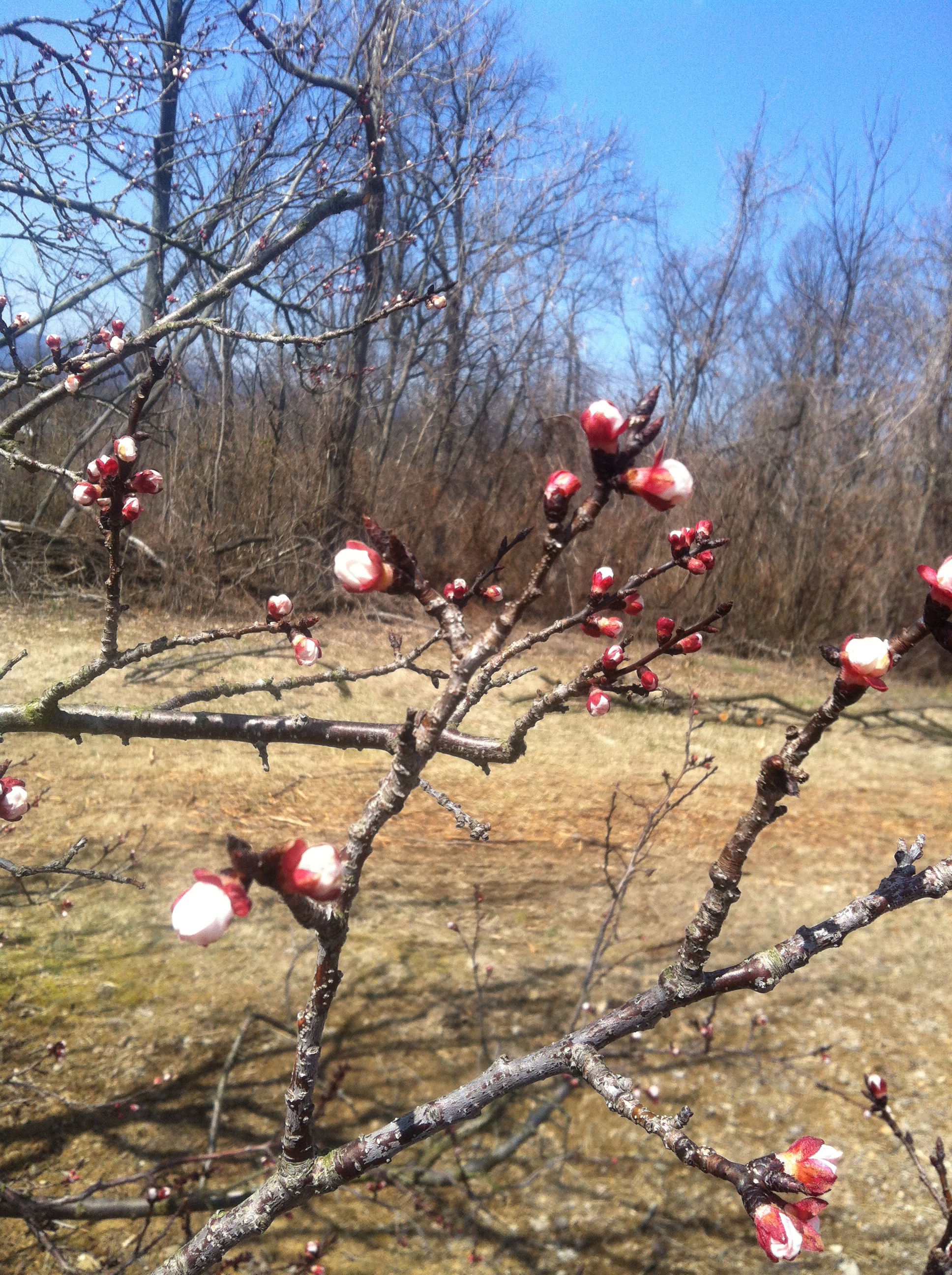
The 2012 growing season began with unseasonable warm temperatures in February and March, which caused fruit-tree bud break to be nearly four weeks ahead of the long-term average. The early bud break led to an early bloom, which lengthened the period when flowers and fruits were susceptible to freezes. Interestingly, trees in the northern Shenandoah Valley were blooming at the same time as trees in Central Virginia; in most years there is a two-week difference. Likewise, many apple, cherry, and peach trees had overlapping bloom. Several frosts damaged blooming fruit trees in Virginia, particularly peaches and cherries, with the most damaging frost occurring on the morning of March 27. Many king bloom in apple were also lost to the frost. But, Virginia growers were spared the colder temperatures that severely reduced the tree fruit crops in North Carolina in late March, and in New York and Michigan in late April. Cool temperatures stretched out the remainder of the bloom period. The frost and prolonged bloom made fruit thinning strategies more challenging.
The fruit producing regions of Virginia were also spared the droughts that devastated farmers in many other parts of the country. However, high winds from the June 29 Derecho storm damaged some orchards in both Central Virginia and Northern Shenandoah Valley orchards. The massive Hurricane Sandy (October 29) that caused widespread flooding in the northeast arrived after most of the Virginia apple crop was already harvested, so damage was minimal and mostly from toppled trees. The early bloom meant that tree-fruit crops were harvested 10-14 days earlier than usual, but this was not problematic since crop losses in other states meant that fruit was in high demand. The USApple crop forecast that was released in August predicted little change in the 2012 apple crop compared to the five-year average. Despite losing many king bloom in apple, fruit size was satisfactory, likely because of adequate rainfall in the latter half of the growing season. I would say that most growers were happy with the yields, quality, and prices that they received for their fruit this year.
Entomology
Warm temperatures in March translated to the earliest biofix dates for oriental fruit moth (OFM) (March 20) and codling moth (CM) (April 14) recorded since 2000. OFM and CM biofix occurred 10 and 9 days earlier, respectively, than the previous earliest in 2002 and 2008, respectively. Cooler weather in April resulted in tufted apple budmoth biofix on April 29, which tied the previous earliest record in 2000 and was only a few days earlier than average. Cool, wet weather following petal-fall resulted in a prolonged period of plum curculio movement into orchards. There were not significant issues with OFM and CM in fruit at harvest and leafroller populations remained at the very low levels seen in recent years. The overwintering population of adult brown marmorated stink bug (BMSB) was smaller than in recent years, due to an unknown source of mortality late in the 2011 season. This translated to relatively low BMSB pressure early in the growing season. BMSB populations rebounded during the summer and large numbers of adults seeking overwintering sites were recorded from late September through about mid-October; the first mass movement to overwintering sites occurred on September 21. BMSB injury to peaches and nectarines at harvest was relatively light, likely due to the combined effects of more targeted sprays, lighter pressure early in the season, and an early harvest that reduced the duration of fruit exposure to some extent. This was also noted in early and mid-season apple varieties. Late season varieties were exposed to the last generation of BMSB in September and October; injury levels in those varieties at harvest varied considerably among blocks, likely according largely to differences in management programs. In general, BMSB management programs did not incite spider mite or San Jose scale populations. However, woolly apple aphid outbreaks in August and September were more common than is typical. Following its first detection in Virginia in 2011, spotted wing drosophila posed a severe challenge to berry growers throughout the 2012 growing season. Some caneberry plantings experienced 100% berry infestation. Blueberries and wine grapes were also affected.
Pathology
Apple scab: We had “normal” scab development in spite of the early 2012 season. Critical primary infection periods occurred Mar 19-20 and Mar 24-25 and scab lesions appeared Apr 13. This led to severe secondary (also primary) infections Apr 18-19 and 21-23. Getting proper spray coverage through several weeks in April was a challenge because of persistent windy and rainy conditions. Nine later secondary infection periods occurred in May. Apparent widespread emergence of QoI (strobilurin) resistance presents an important problem for scab management in Frederick County.
Rusts: An unusual development with cedar rust infection was heavy infection on flower cluster leaves (from Mar 24-25) as well as the mid-shoot positions (from May 5-15). For the most part, fruit escaped quince rust infection because wetting periods were too cool for infection while the blossoms were most susceptible.
Powdery mildew: This year we had 44 dry weather “mildew infection days” between Mar 19.and May 31. Summer rains prolonged the length of shoot susceptibility with more likelihood of bud infection, overwintering, and a recurrent problem next year.
Fire blight: Although there were several opportunities for blossom blight infection from Mar 24-Apr 20, there were more numerous reports of fire blight from areas east of the Blue Ridge and the Roanoke area south where bloom was open earlier than in the Winchester area. Some pear shoot symptoms were evident in central VA as early as Apr 3, from infection in mid-March.
Summer diseases: We passed the 250-wetting hour sooty blotch/flyspeck threshold by May 25, four weeks ahead of last year, and the second earliest date for reaching this predictive threshold on record since 1994. Sooty blotch was observed in non-treated trees at our AREC June 13, and this confirmed the validity of using Apr 8 as the unusually early petal fall date and Apr 18 as the date for starting wetting hour accumulation.