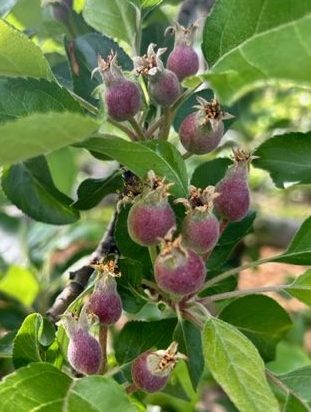
Freeze Damage – What to Do Next

The impact of the recent freeze has been all over the place across the state. Differences in temperature, elevation, dew point, and bud stage have made a big difference, so it’s not surprising that orchards—even blocks within the same farm—are showing very different outcomes. Take some time to look carefully before making any decisions.

Give it a few days before making a final call: If it looks like the crop is gone, I’d encourage you not to rush that conclusion just yet. Some cultivars may still push delayed or “rat-tail” blooms over the next several days. These may have escaped the freeze and could still set a small crop. It’s worth scouting your trees over the next 7–10 days before making a final decision.

If crop loss is severe: If you’re confident that the crop is largely gone, try to avoid additional nitrogen applications unless trees clearly look weak or deficient. With little to no crop, trees will naturally push vegetative growth, and you’ll likely see shoots taking off quickly and the canopy getting dense in a hurry. Extra nitrogen will only make that worse and add more work later, especially during pruning.

If you still have a light crop: If there is still some fruit out there and you want to maintain quality, be prepared for some canopy management. With fewer fruit acting as a sink, trees will still push vegetative growth. Summer pruning may be needed to open things up and allow better light into the canopy.

Managing excessive growth and fire blight risk: You may want to consider prohexadione-calcium products (Apogee, Kudos) to help slow down shoot growth. This can also help reduce the amount of tender tissue that’s highly susceptible to shoot blight.
Also, don’t forget that fire blight risk hasn’t gone away. Any blossoms that were open before the freeze—or delayed blooms that show up afterward—can still be infected. So it’s worth staying on top of that as the season progresses.

Thinning decisions (where crop remains): If you still have a crop and are thinking about thinning, I would hold off for about a week. With the recent warm weather and what’s coming, trees are likely running in a carbohydrate deficit, which can naturally push fruit drop. Applying thinners right now—especially around petal fall—could easily lead to over-thinning.
It’s a good time to check the NEWA carbohydrate thinning model (https://newa.cornell.edu/apple-carbohydrate-thinning). Use your nearest weather station and plug in your green tip and bloom dates to get a better sense of what’s happening in your specific location.

Don’t abandon orchard management: Even in blocks where the crop is minimal or gone, it’s still important to take care of the trees. Keeping foliage healthy and maintaining a functional canopy will pay off in return bloom and next year’s crop. You may adjust your program, but I wouldn’t walk away from it entirely.

I’ll keep sharing updates on thinning and the carbohydrate model for areas where a crop is still present. I know this season started off with a severe frost and has been a tough one for many of you, but we’ll keep working through it together and adjust our approach as we see how things develop over the coming days and weeks.

Devastating Freeze Damage in Winchester and Parts of Virginia

This freeze event turned out to be far more severe than forecasted. The predicted lows for the morning of April 8 were around 27–28°F, but actual temperatures dropped much lower. In our Winchester area, I recorded temperatures ranging from 19.5 to 24°F depending on elevation. The level of damage we are seeing is unlike anything I’ve observed in apples over the past eight years at Virginia Tech. I held off reporting yesterday because, quite honestly, I didn’t believe what I was seeing and wanted to confirm the extent of the injury.

Unfortunately, we are looking at a near-complete crop loss in apples in this area. Across multiple cultivars—‘Pink Lady’, ‘Gala’, and ‘Honeycrisp’—and across all developmental stages, from first pink to full bloom, flowers were completely killed. When dissected, both king and side blooms were brown and water-soaked, and entire clusters appeared “roasted.”

Based on our field assessments, apple mortality reached approximately 100% in ‘Pink Lady’ and ‘Honeycrisp’ and about 98% in ‘Gala’. In peaches, mortality was 100% in ‘SunHigh’ and around 98% in ‘Redhaven’, with slightly better survival at higher elevations. In cherries, damage was estimated at around 56%. In practical terms, this represents a complete wipeout for apples and peaches in many Winchester-area blocks. However, conditions may vary across Virginia. Some regions did not experience temperatures below critical thresholds, and those areas may still have a reasonable crop if no additional stress events occur.

At this stage, it is important to continue monitoring orchards carefully. Some cultivars may produce secondary or late flowers that could have escaped injury, although any surviving bloom is likely to contribute only a small fraction of a normal crop. Management plans will need to be adjusted accordingly, including decisions related to thinning and pest management, all of which should now be aligned with the expected reduced crop load.

I wish I had better news to share, but it is important to provide a clear and accurate picture so informed decisions can be made early.

Apple flowers at full bloom, completely killed by the April 8 freeze event.

Apple flowers at the pink stage were also completely killed by the freeze. The image on the right shows the same cluster as the left after removing the petals.

Key Early-Season Spray Programs in Apples

As we move through pink and bloom in most parts of the state, many of the decisions we make in apple orchards can affect fruit quality at harvest and even influence next year’s crop. Early-season sprays are not only about protecting foliage and fruitlets; they also play an important role in managing fruit size, bitter pit, vegetative growth, fruit finish, and return bloom.

Calcium starts early, not late
When growers think about bitter pit management, calcium often comes to mind as a late-season program. In reality, early-season calcium sprays are highly important, especially for cultivars such as Honeycrisp, Golden Delicious, and York Imperial that are prone to bitter pit and cork spot. A seasonal target of 4 to 14 lb of actual calcium per acre is recommended, which is roughly equivalent to 15 to 50 lb of calcium chloride per acre, or about 2 to 8 lb per cover spray depending on the program. Calcium sprays that begin around pink are usually more effective than waiting until later in the season.

Boron supports both fruit set and calcium movement
In most programs, 0.5 to 1 lb of actual boron per acre is sufficient, which is about 2.5 to 5 lb of Solubor per acre. This can be applied at pink, at bloom, or about 7 to 10 days after petal fall. Boron can be included with calcium chloride in the spray tank, but one important point is to avoid pre-mixing Solubor and calcium chloride together in a small volume of water before adding them to the main tank. They should be added separately.

Prohexadione-calcium is more than a growth regulator
Prohexadione-calcium products such as Kudos and Apogee can be very useful when applied early, particularly at pink. Most growers think of these products mainly for shoot growth control, but early applications can also help reduce bitter pit and suppress blossom blight and later shoot blight development. In vigorous blocks, that combination of benefits can make prohexadione-calcium one of the most valuable early-season materials.

The standard rate highlighted in your handouts is 6 oz per acre. Performance can drop when spray water is alkaline or contains high levels of calcium carbonate, so hard water should be conditioned with ammonium sulfate. A surfactant can improve uptake, although some combinations may foam and require an anti-foam material. One important limitation is compatibility: prohexadione-calcium should not be tank-mixed with calcium or boron. It should also be kept in mind that prohexadione-calcium is not a substitute for calcium sprays.

Urea can help when fruit set or fruit size is at risk
Foliar urea remains a useful tool early in the season, particularly when growers are trying to promote cell division and improve fruit sizing. It is especially valuable in Gala and in situations where king blooms have been damaged by frost, since the loss of king fruit can shift the crop toward smaller fruit. Applications at bloom at 3 lb per 100 gal, followed by petal fall and first cover applications at 5 to 6 lb per 100 gal, can help support fruit set and early fruit growth.

There is another benefit at bloom: foliar urea can help extend the effective pollination period. That said, foliar nitrogen should not be viewed as a substitute for a sound ground nitrogen program, because it does not move down into woody tissues the same way soil-applied nitrogen contributes to whole-tree reserves. Its role is more immediate and is mainly tied to fruit set and sizing.

Fruit finish problems begin soon after bloom
For Golden Delicious and Gala, fruit finish issues such as russeting and scarf skin are often tied to humid conditions during the first 30 to 40 days of fruit development. Where these problems are common, GA₄₊₇ products such as ProVide 10SG or Novagib 10L can be useful. The handouts recommend 2 to 4 sprays beginning at petal fall and repeating at 7- to 10-day intervals. This is one of those programs where timing is much more important than waiting until symptoms are visible, because by then the damage to fruit finish has already started.

Young trees need a different mindset
For second- and third-leaf trees, the goal is often not crop retention but defruiting, so the tree can put more energy into canopy and framework development. There are several approaches, including blossom thinning with lime sulfur plus oil during bloom and post-bloom thinning with 6-BA or NAA plus carbaryl at petal fall and again at 6 to 12 mm fruit size. Ethephon plus carbaryl plus oil can also work at 10 to 15 mm, but this mix should be avoided on weaker or medium-vigor cultivars on dwarfing rootstocks because of the risk of excessive growth suppression.

Defruiting young apple trees using blossom thinning with lime sulfur and oil (left) and post-bloom chemical thinners (right).

Frost Watch for Tuesday Night into Wednesday Morning

I hate to start the season with a frost warning post, but this has become our new norm anyway.

The good news is that, based on the forecast so far, I do not think the cold weather expected Tuesday night into Wednesday morning will be a major concern for many of us. I checked the forecast across several apple-producing regions in Virginia, and temperatures appear likely to range between about 23 and 25°F from midnight through sunrise on Wednesday morning. Those temperatures could cause at least some level of injury in certain fruit crops, depending on location and, more importantly, the developmental stage of the trees.

Here in Winchester/Frederick County, peaches are generally between calyx green and calyx red, and most apple cultivars are still not much beyond green tip. At these stages, this event should not be a major issue for either crop. That said, conditions may be different in other parts of the state. In central Virginia, for example, some peach cultivars may already be at 20–50% bloom, and those blocks could see damage if temperatures fall below about 24°F for a couple of hours. The same concern applies to apple cultivars that have reached tight cluster, where some injury can occur around 24°F, especially when dew points are low.

So, is there anything you can do?

Yes — if your trees are at a stage that could be truly affected, and you have frost protection options available, this may be the time to consider using them. Based on the current forecast, this looks like a fairly typical radiative frost event, with light winds, mostly clear skies, and low dew points. Under these conditions, tools such as wind machines, propane heaters, and irrigation can all be effective. Both under-tree and over-tree sprinklers may help raise orchard temperature by a couple of degrees, but protection efforts would likely need to begin Tuesday night.

For more information on sprinkler use for frost protection, check out this previous post:
https://tree-fruit-horticulture.vaes.vt.edu/2023/03/07/sprinklers-for-frost-protection-what-you-need-to-know-before-turning-them-on/

As always, this post reflects what I can see in the forecast right now. Please continue to monitor your local weather closely and use your own judgment based on your site conditions, crop stage, and available frost protection methods.

Thinning Update: Week of May 6 – Winchester and Central Virginia

If you haven’t applied any thinning treatments yet and are planning to start this week, I’ve run the carbohydrate thinning model for both Winchester and Central Virginia to guide your decisions.

For Winchester/Frederick County:
Last week offered ideal thinning conditions—fruit size ranged from 6–15 mm, the carbohydrate model indicated a deficit (favorable for thinning), and the temperatures were warm enough for effective 6-BA and NAA activity. If you applied thinning sprays last week, you’re in great shape—no further action is needed this week or until at least next Monday. Keep in mind that it usually takes 10–14 days under current weather conditions to evaluate thinning response. If you didn’t thin last week and want to start now, here are your options:

Before applying anything, I recommend closely inspecting your trees and gently shaking some branches to check for natural fruit drop. If you still believe thinning is needed, don’t delay—waiting until next week may be too late.

Cornell Apple Carbohydrate Thinning Model for Winchester, VA. Green tip date is March 16, and full-bloom date is April 12.

For Central Virginia:
The same guidance applies. If you applied thinning sprays last week, no action is needed this week. If not, refer to the thinning recommendation table below for this week’s guidance.

Cornell Apple Carbohydrate Thinning Model for Roseland, VA. Green tip date is March 14, and full-bloom date is April 10.

Ideal Conditions for Apple Fruit Thinning This Week: Model Results for Winchester and Central Virginia

As you know, despite the freeze damage we experienced on April 9, several apple cultivars across multiple locations are still carrying at least a few times more fruit than desired. Chemical fruit thinning remains our best option before it’s too late and we are left with the laborious task of hand thinning. The best timing for applying 6-BA and NAA for fruit thinning is during the 6–18 mm fruit size window, and we are currently within that window for ‘Gala’ and most other apple cultivars in the Winchester/Frederick County area. To help guide thinning applications and ensure trees are responsive to treatments, I ran the Cornell Apple Carbohydrate Thinning Model (https://newa.cornell.edu/apple-carbohydrate-thinning). Based on key parameters, the model helps determine both the timing and rate of thinning applications. Using data from the weather station located at our research center in Winchester, and with a green tip date of March 16 and a full bloom date of April 12 for ‘Gala’, the model predicts that starting tomorrow—Tuesday, April 29—and continuing through the end of the week, conditions will be ideal for thinning treatments. The trees’ accumulated carbohydrate balance is generally negative, which is exactly what we want for effective thinning, and temperatures—especially on Wednesday and Friday—will be perfect for the performance of 6-BA and NAA. The model also recommends using the standard rate for thinning materials.

Cornell Apple Carbohydrate Thinning Model for Winchester, VA. Green tip date is March 16, and full-bloom date is April 12.

For growers in Central Virginia, I also ran the model using the Roseland, VA weather station, with ‘Gala’ green tip and full bloom dates set as March 14 and April 10, respectively. As shown below, if you haven’t already applied your thinning sprays, we are still within the optimal thinning window. The model suggests that if you apply tomorrow (April 29), you should increase the thinning rate by 30%. However, based on the daily carbohydrate balance, I believe that applications made this Wednesday and Thursday will likely require only the standard rate.

Cornell Apple Carbohydrate Thinning Model for Roseland, VA. Green tip date is March 14, and full-bloom date is April 10.

Apple Carbohydrate Thinning Model Outputs – Central Virginia – Roseland, VA

The Apple Carbohydrate Thinning Model uses key environmental variables—primarily temperature and solar radiation—to estimate the carbohydrate status of apple trees. This status helps predict how responsive trees will be to chemical thinning agents. When trees are carbohydrate-deficient, they are more likely to shed fruit, making them more responsive to thinning. Conversely, when conditions are favorable for photosynthesis—sunny and warm—trees tend to retain their fruit and respond less to thinning applications.

Importantly, the model does not rely on a single day’s data. Instead, it calculates a six-day weighted average of carbohydrate balance to determine whether the tree is in a state of surplus or deficit. This running average guides decisions on whether thinning materials should be applied, what kind of response to expect, and how much product to use to avoid over- or under-thinning. You can refer to Column 6 in the table below to view the six-day average.

In addition, the model tracks accumulated degree days (DD) from full bloom, which is why recording the exact date of full bloom is essential. The optimal thinning window usually occurs between 200 and 250 DD—coinciding closely with the 6–18 mm fruit size window. See Column 7 in the table below for the current degree-day accumulation.

Based on weather data from the Roseland, VA station and the growth stage of ‘Gala’ apples, the model projects that trees will reach approximately 200 DD by Saturday, April 26. This signals the start of the ideal thinning window, which will extend through the 250 DD threshold. With forecasted temperatures staying above 75°F from Saturday through Wednesday, conditions are favorable for effective uptake of thinning agents such as NAA and 6-BA.

However, the model also indicates a carbohydrate surplus from April 26 through at least the next three days. As a result, it recommends increasing the thinning material rate by 30% above standard. You can find these suggested rates in the last column of the table below. Under surplus conditions, the risk of over-thinning or excessive natural fruit drop is reduced. Still, conditions may shift by Tuesday or Wednesday, so rate adjustments might be necessary.

I’ll re-run the model early next week and share updated guidance. In the meantime, you can run the model yourself at: https://newa.cornell.edu/apple-carbohydrate-thinning
This will allow you to select the closest weather station and enter your specific green tip and full bloom dates for a more localized prediction.

Bottom line: The thinning window begins this Saturday and will continue through the coming week. Plan your applications accordingly.

Apple Carbohydrate Thinning Model-Weather Station (Roseland, VA), Gala- Green tip (March 14), Full Bloom (April 10)

Rescuing Apple Crops After a Frost or Hailstorm: Can 6-BA + GA Treatments Help?

One way growers have managed to salvage part of their crop in years when a hard freeze or hailstorm hits during apple bloom is by applying a combination of plant growth regulators—specifically 6-benzyladenine (6-BA) and gibberellins GA₄+₇—found in products like Promalin® and Perlan®. These products essentially mimic the natural hormones produced by developing seeds after successful fertilization. By applying them during bloom or shortly after a frost or hail event, it’s possible to induce parthenocarpic fruit set—a process in which fruit develops without fertilization, resulting in seedless apples.

How It Works: When fertilization doesn’t occur—due to frost injury, hail damage, or disrupted pollination—flowers typically abscise. But applying GA₄+₇ and 6-BA can supplement those missing signals. Gibberellins stimulate fruit cell enlargement, and cytokinins like 6-BA promote cell division. Together, they initiate fruit development in flowers that would otherwise abort. This treatment has shown success across many trials and real-world orchard scenarios, with growers reporting the ability to recover 20–30% of a normal crop. While that might not seem like much in a bumper crop year, it can make a huge difference in disaster years—sometimes being the difference between breaking even and facing a total loss.

For best results, the sprays should be applied as soon as possible after the damage, ideally within 24 to 48 hours. There’s still a chance of success if applied up to 4–6 days later, but the earlier the application, the better the outcome. It’s important to remember that completely dead flowers cannot be revived, but if the blooms are partially damaged and still viable, there’s a good chance they will respond. The optimal timing is from bloom through petal fall. Later applications, once fruitlets are already forming, are far less effective. Conditions at and following application also matter—moderate temperatures and no immediate refreeze improve absorption and success.

Managing Expectations: While the benefits are real, it’s important to manage expectations:

  • Results vary by cultivar, timing, extent of damage, and orchard conditions.
  • The treatment won’t help if all flowers are completely destroyed.
  • Parthenocarpic fruits are usually of good eating quality, but they may be slightly smaller, more elongated, and are sometimes more prone to dropping if they’re growing alongside seeded fruit.

Nonetheless, when applied under the right conditions, GA₄+₇ + 6-BA sprays have repeatedly increased fruit set and overall yield, even in the absence of pollination. The resulting apples typically retain their flavor, sweetness, and firmness. In most cases, there’s no downside in terms of market quality, especially when crop load is light.

In addition to PGRs, applying low-biuret urea at a rate of 3 lb/acre during bloom can also help improve fruit set, particularly under stressful conditions. Urea serves as a readily available nitrogen source, supporting early cell division and metabolic activity in developing fruitlets. When used in conjunction with GA₄+₇ and 6-BA, it can enhance the fruit set response and overall effectiveness of frost recovery treatments.

Severe Frost Damage Hits Early Bloom: A Look at the Impact on Apple and Stone Fruit Blossoms

I’m sure many of you have noticed how inaccurate the weather forecast was over the past 24 hours. While the minimum temperature was predicted to be 27°F, we recorded temperatures below 24°F for over an hour early this morning (4/9) at the ASH Jr. AREC research farm in Winchester. Unfortunately, this unexpected dip resulted in severe damage to both our apple and stone fruit crops. The extent of injury far exceeds what anyone might have anticipated based on the forecasted temperature profiles from Monday and Tuesday. Following the freeze event we witnessed this morning, my team collected flower samples from multiple cultivars and species across the farm. Below is a summary of our findings:

In stone fruits, Red Haven peaches showed 66% flower mortality, while SunHigh peaches experienced complete (100%) loss. Cherries were also heavily impacted, with 64% of flowers dead. Among apples, Pink Lady suffered total flower loss—100% mortality of both king and lateral flowers. ‘Honeycrisp’ on MM.111 rootstock showed the most severe damage, with 92.5% king and 87.2% lateral flower mortality. On B.9 rootstock, ‘Honeycrisp’ fared slightly better but still showed high injury levels (90% king and 47% lateral mortality). ‘Gala’ trees showed 75% mortality in king flowers and 47% in lateral flowers, while ‘Fuji’ was the least affected—likely due to being slightly behind in development—with only 18% and 15% mortality, respectively. ‘Red Delicious’ experienced consistent and heavy damage, with 100% king flower mortality and lateral flower losses ranging from 75% to 85%, averaging around 81%.

Representative flower buds of cherries, peaches, and apples (top to bottom), showing live (left) and dead (right) flowers. These cross-sections were taken from trees at the AHS Jr. AREC research farm following a brief but intense freeze event on April 9, 2025.

I strongly encourage all growers to carefully assess their own orchards—don’t rely solely on visual inspection from the outside. I was surprised to find that several peach flowers appeared normal until I dissected them, only to find the ovaries completely dead. Keep in mind, your apple thinning decisions will hinge heavily on the extent of damage caused by this freeze. I’ve attached several images (see above) to help illustrate what we’re considering alive versus dead when evaluating flower buds.

Spring Freeze on Wednesday Morning: Possible, But Likely Not Too Severe

It’s that time of year when we all stay on our toes, watching closely for any spring freeze that might harm our delicate pome and stone fruit blossoms. So far, flower development has been progressing slowly but steadily, and everything looks fine. This year is not shaping up to be a heavy bloom year for apple orchards—especially in Frederick County and, to some extent, in southwest Virginia, though for two entirely different reasons.

In Frederick County, I predicted last year that flower development for 2025 would likely be suboptimal. This is due to a severe carbohydrate deficit we experienced around the time of flower bud initiation (mid-April to the first 10 days of May 2024). That deficit not only contributed to fruit abscission last season but also appears to have impacted flower bud development for this year. So if you’re seeing fewer blooms, it’s not your fault. In Southwest Virginia, on the other hand, any reduction in bloom is more likely tied to the secondary bloom that occurred last fall following Hurricane Helene. I don’t expect this to significantly affect all crops or locations, but if you noticed extensive secondary bloom in your blocks last fall, those trees will likely show reduced bloom this spring.

Now, regarding the upcoming frost: I remain optimistic that things will turn out just fine, even with the predicted freeze on Wednesday morning. This will be a typical radiative freeze—clear skies, low wind—which causes cold air to settle near the ground and warmer air to rise. The lowest temperatures are expected right before sunrise, and once the sun is up, things should return to normal quickly. Here in the Winchester area, the forecast shows a low of 26°F lasting for about one hour. Other areas, such as Rappahannock, Madison, and Nelson counties, are projected to reach 28–29°F.

Is that critical? Not really. Even if apples, peaches, or cherries are at full bloom, such a brief dip will likely cause only about 10% blossom damage. That level of damage is often considered a natural and even beneficial thinning. In fact, such frost events can act as a signal to the tree to initiate more flower buds for the following season, helping ensure a strong bloom next year. So—no major concerns, unless you observe temperatures that fall within the critical ranges capable of killing 90% or more of your flowers (refer to the critical temperature table https://irp.cdn-website.com/45c0e18f/files/uploaded/Critical_Temperatures_Frost_Damage_Fruit_Trees_Utah.pdf

Should you turn on wind machines or irrigation (under-tree or over-tree sprinklers)?
That’s your call. Personally, I wouldn’t, as long as temperatures stay within the forecasted range. But if you want to play it safe, it wouldn’t hurt—especially in low-elevation or frost pocket areas where these tools can truly make a difference. Since it’s a radiative freeze, both wind machines and sprinklers can be effective. Let’s hope for the best and I look forward to seeing you all at our upcoming orchard meetings!