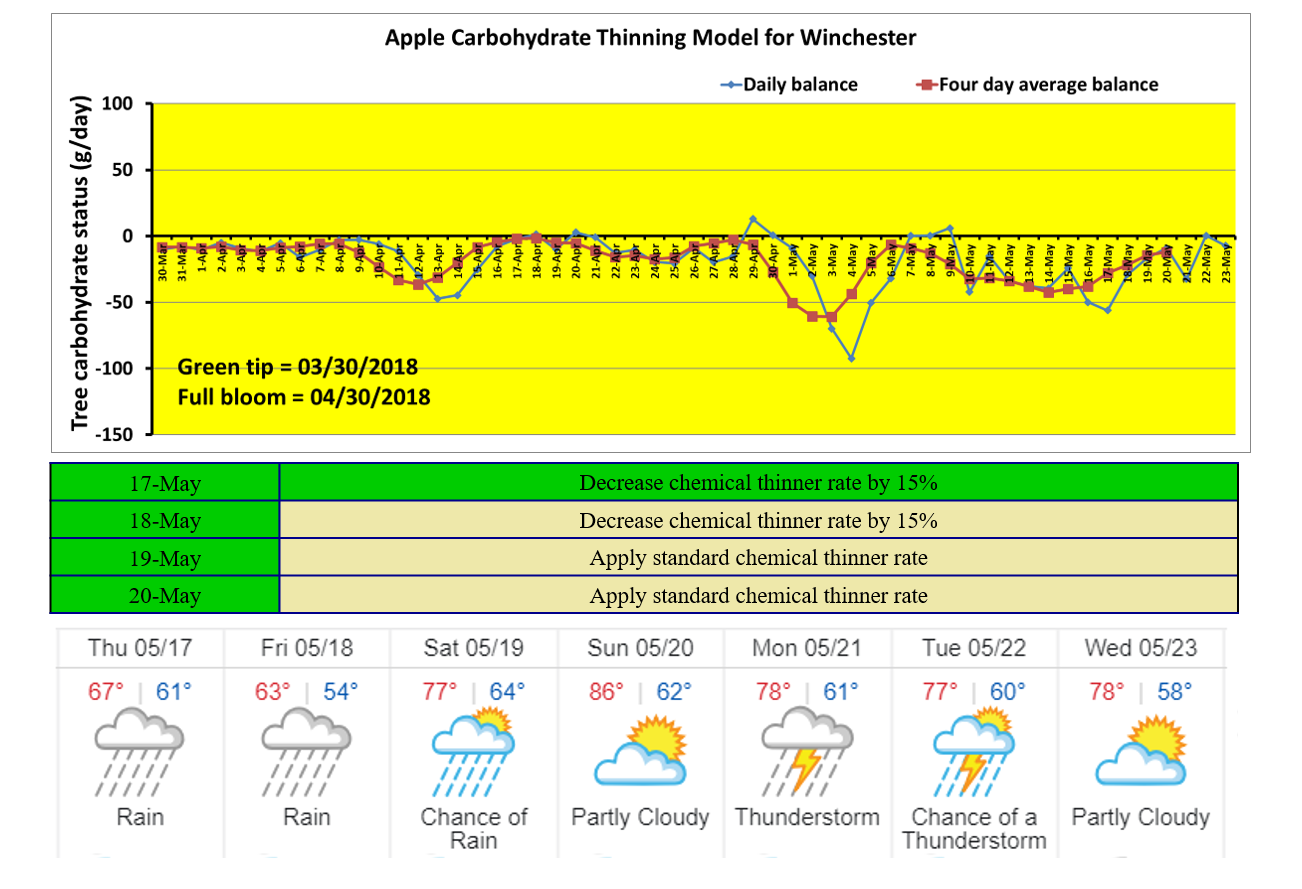
According to the carbohydrate thinning model outputs for Winchester, we had only 1 day of carbohydrate surplus since the beginning of the growing season, with a value below 10 g carbon/day. This is mainly due to the several hot/cloudy/ and or rainy days and warm nights we had in the last two weeks. For those who started thinning applications last week (May 10-12), it might be wise to wait to see the effect of these treatments before starting extra thinning applications next week. For those who did not start thinning yet, Sunday (May 20) will probably be a good chance to apply your first thinning application. Fruit size will be < 15 mm for most apple cultivars and temperature will be good for 6-BA and NAA applications. As for today, we have Pink Lady at 16.5 mm, Fuji (12.35), Gala (15.6) and Honeycrisp (13.3). The model recommends applying the standard rate of chemical thinners and so do I.
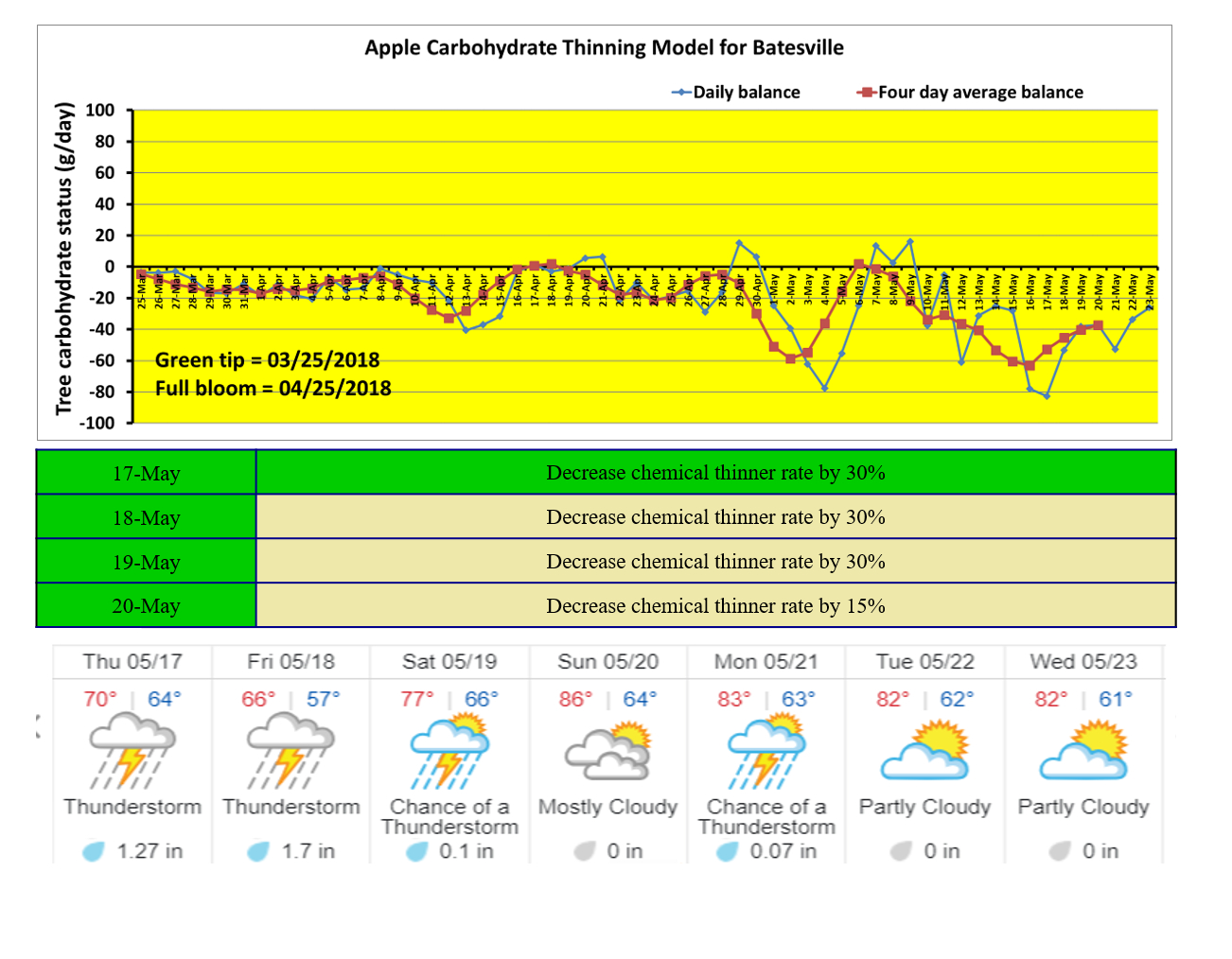
For Central Virginia, the model outputs are almost similar to those of Winchester, with a more carbohydrate deficit is expected in the next three days. The model recommends reducing the rat of chemical thinners by 15-30%. Fruit size is > 15 mm now and 6-BA or NAA won’t be effective as thinners. Ethephon should be used instead if more thinning is needed. use ethephon (0.5 to 1.5 pints) + carbaryl (1 pint/ 100 gallon). For alkaline water, buffering the spray solution to a pH of 3 to 5 will increase chemical stability and effectiveness. With a temperature ≥ 85 oF, ethephon might result in overthinking.
Tree Fruit Horticulture Updates
