I hate to start the season with a frost warning post, but this has become our new norm anyway.
The good news is that, based on the forecast so far, I do not think the cold weather expected Tuesday night into Wednesday morning will be a major concern for many of us. I checked the forecast across several apple-producing regions in Virginia, and temperatures appear likely to range between about 23 and 25°F from midnight through sunrise on Wednesday morning. Those temperatures could cause at least some level of injury in certain fruit crops, depending on location and, more importantly, the developmental stage of the trees.
Here in Winchester/Frederick County, peaches are generally between calyx green and calyx red, and most apple cultivars are still not much beyond green tip. At these stages, this event should not be a major issue for either crop. That said, conditions may be different in other parts of the state. In central Virginia, for example, some peach cultivars may already be at 20–50% bloom, and those blocks could see damage if temperatures fall below about 24°F for a couple of hours. The same concern applies to apple cultivars that have reached tight cluster, where some injury can occur around 24°F, especially when dew points are low.
So, is there anything you can do?
Yes — if your trees are at a stage that could be truly affected, and you have frost protection options available, this may be the time to consider using them. Based on the current forecast, this looks like a fairly typical radiative frost event, with light winds, mostly clear skies, and low dew points. Under these conditions, tools such as wind machines, propane heaters, and irrigation can all be effective. Both under-tree and over-tree sprinklers may help raise orchard temperature by a couple of degrees, but protection efforts would likely need to begin Tuesday night.
As always, this post reflects what I can see in the forecast right now. Please continue to monitor your local weather closely and use your own judgment based on your site conditions, crop stage, and available frost protection methods.
One way growers have managed to salvage part of their crop in years when a hard freeze or hailstorm hits during apple bloom is by applying a combination of plant growth regulators—specifically 6-benzyladenine (6-BA) and gibberellins GA₄+₇—found in products like Promalin® and Perlan®. These products essentially mimic the natural hormones produced by developing seeds after successful fertilization. By applying them during bloom or shortly after a frost or hail event, it’s possible to induce parthenocarpic fruit set—a process in which fruit develops without fertilization, resulting in seedless apples.
How It Works: When fertilization doesn’t occur—due to frost injury, hail damage, or disrupted pollination—flowers typically abscise. But applying GA₄+₇ and 6-BA can supplement those missing signals. Gibberellins stimulate fruit cell enlargement, and cytokinins like 6-BA promote cell division. Together, they initiate fruit development in flowers that would otherwise abort.This treatment has shown success across many trials and real-world orchard scenarios, with growers reporting the ability to recover 20–30% of a normal crop. While that might not seem like much in a bumper crop year, it can make a huge difference in disaster years—sometimes being the difference between breaking even and facing a total loss.
For best results,the sprays should be applied as soon as possible after the damage, ideally within 24 to 48 hours. There’s still a chance of success if applied up to 4–6 days later, but the earlier the application, the better the outcome. It’s important to remember that completely dead flowers cannot be revived, but if the blooms are partially damaged and still viable, there’s a good chance they will respond. The optimal timing is from bloom through petal fall. Later applications, once fruitlets are already forming, are far less effective. Conditions at and following application also matter—moderate temperatures and no immediate refreeze improve absorption and success.
Managing Expectations: While the benefits are real, it’s important to manage expectations:
Results vary by cultivar, timing, extent of damage, and orchard conditions.
The treatment won’t help if all flowers are completely destroyed.
Parthenocarpic fruits are usually of good eating quality, but they may be slightly smaller, more elongated, and are sometimes more prone to dropping if they’re growing alongside seeded fruit.
Nonetheless, when applied under the right conditions, GA₄+₇ + 6-BA sprays have repeatedly increased fruit set and overall yield, even in the absence of pollination. The resulting apples typically retain their flavor, sweetness, and firmness. In most cases, there’s no downside in terms of market quality, especially when crop load is light.
In addition to PGRs, applying low-biuret urea at a rate of 3 lb/acre during bloom can also help improve fruit set, particularly under stressful conditions. Urea serves as a readily available nitrogen source, supporting early cell division and metabolic activity in developing fruitlets. When used in conjunction with GA₄+₇ and 6-BA, it can enhance the fruit set response and overall effectiveness of frost recovery treatments.
I’m sure many of you have noticed how inaccurate the weather forecast was over the past 24 hours. While the minimum temperature was predicted to be 27°F, we recorded temperatures below 24°F for over an hour early this morning (4/9) at the ASH Jr. AREC research farm in Winchester. Unfortunately, this unexpected dip resulted in severe damage to both our apple and stone fruit crops. The extent of injury far exceeds what anyone might have anticipated based on the forecasted temperature profiles from Monday and Tuesday. Following the freeze event we witnessed this morning, my team collected flower samples from multiple cultivars and species across the farm. Below is a summary of our findings:
In stone fruits, Red Haven peaches showed 66% flower mortality, while SunHigh peaches experienced complete (100%) loss. Cherries were also heavily impacted, with 64% of flowers dead. Among apples, Pink Lady suffered total flower loss—100% mortality of both king and lateral flowers. ‘Honeycrisp’ on MM.111 rootstock showed the most severe damage, with 92.5% king and 87.2% lateral flower mortality. On B.9 rootstock, ‘Honeycrisp’ fared slightly better but still showed high injury levels (90% king and 47% lateral mortality). ‘Gala’ trees showed 75% mortality in king flowers and 47% in lateral flowers, while ‘Fuji’ was the least affected—likely due to being slightly behind in development—with only 18% and 15% mortality, respectively. ‘Red Delicious’ experienced consistent and heavy damage, with 100% king flower mortality and lateral flower losses ranging from 75% to 85%, averaging around 81%.
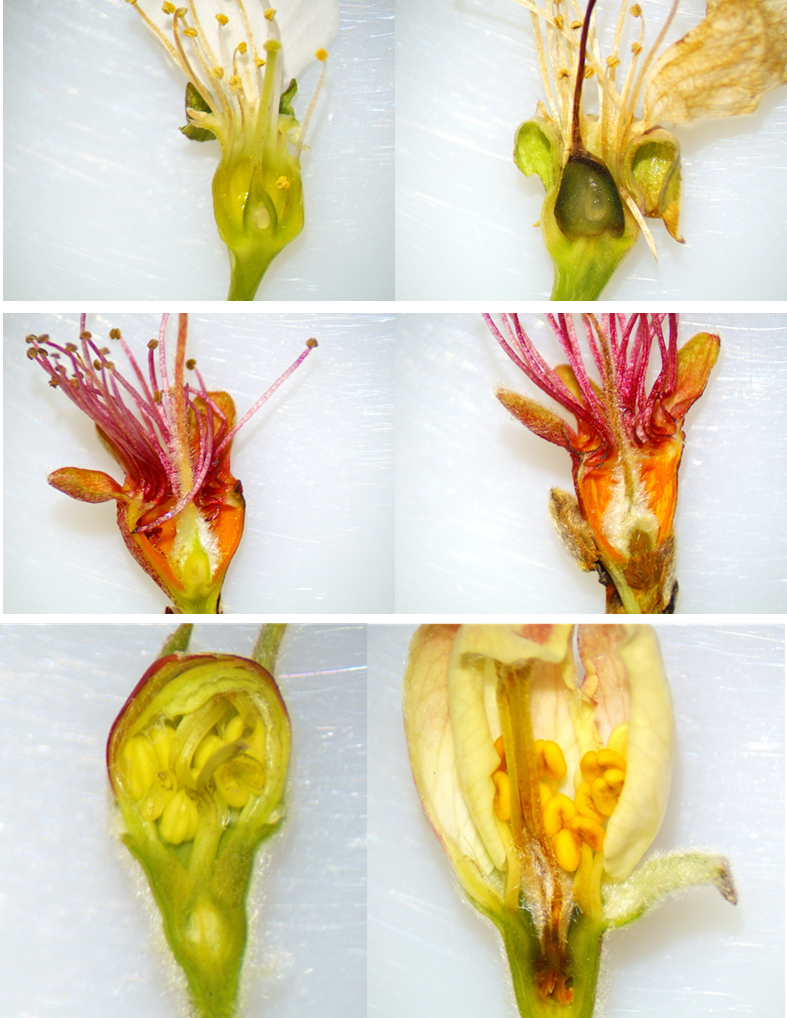
Representative flower buds of cherries, peaches, and apples (top to bottom), showing live (left) and dead (right) flowers. These cross-sections were taken from trees at the AHS Jr. AREC research farm following a brief but intense freeze event on April 9, 2025.
I strongly encourage all growers to carefully assess their own orchards—don’t rely solely on visual inspection from the outside. I was surprised to find that several peach flowers appeared normal until I dissected them, only to find the ovaries completely dead. Keep in mind, your apple thinning decisions will hinge heavily on the extent of damage caused by this freeze. I’ve attached several images (see above) to help illustrate what we’re considering alive versus dead when evaluating flower buds.
It’s that time of year when we all stay on our toes, watching closely for any spring freeze that might harm our delicate pome and stone fruit blossoms. So far, flower development has been progressing slowly but steadily, and everything looks fine. This year is not shaping up to be a heavy bloom year for apple orchards—especially in Frederick County and, to some extent, in southwest Virginia, though for two entirely different reasons.
In Frederick County, I predicted last year that flower development for 2025 would likely be suboptimal. This is due to a severe carbohydrate deficit we experienced around the time of flower bud initiation (mid-April to the first 10 days of May 2024). That deficit not only contributed to fruit abscission last season but also appears to have impacted flower bud development for this year. So if you’re seeing fewer blooms, it’s not your fault. In Southwest Virginia, on the other hand, any reduction in bloom is more likely tied to the secondary bloom that occurred last fall following Hurricane Helene. I don’t expect this to significantly affect all crops or locations, but if you noticed extensive secondary bloom in your blocks last fall, those trees will likely show reduced bloom this spring.
Now, regarding the upcoming frost: I remain optimistic that things will turn out just fine, even with the predicted freeze on Wednesday morning. This will be a typical radiative freeze—clear skies, low wind—which causes cold air to settle near the ground and warmer air to rise. The lowest temperatures are expected right before sunrise, and once the sun is up, things should return to normal quickly. Here in the Winchester area, the forecast shows a low of 26°F lasting for about one hour. Other areas, such as Rappahannock, Madison, and Nelson counties, are projected to reach 28–29°F.
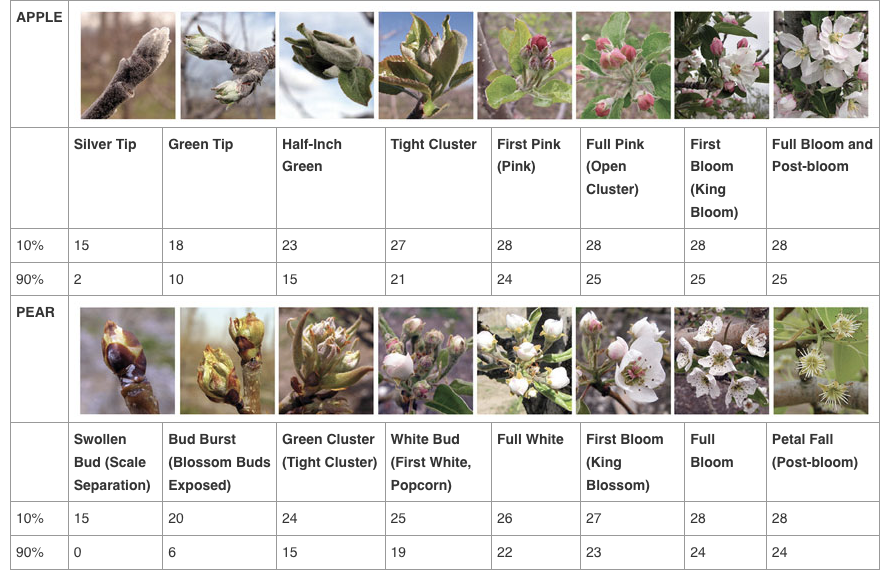
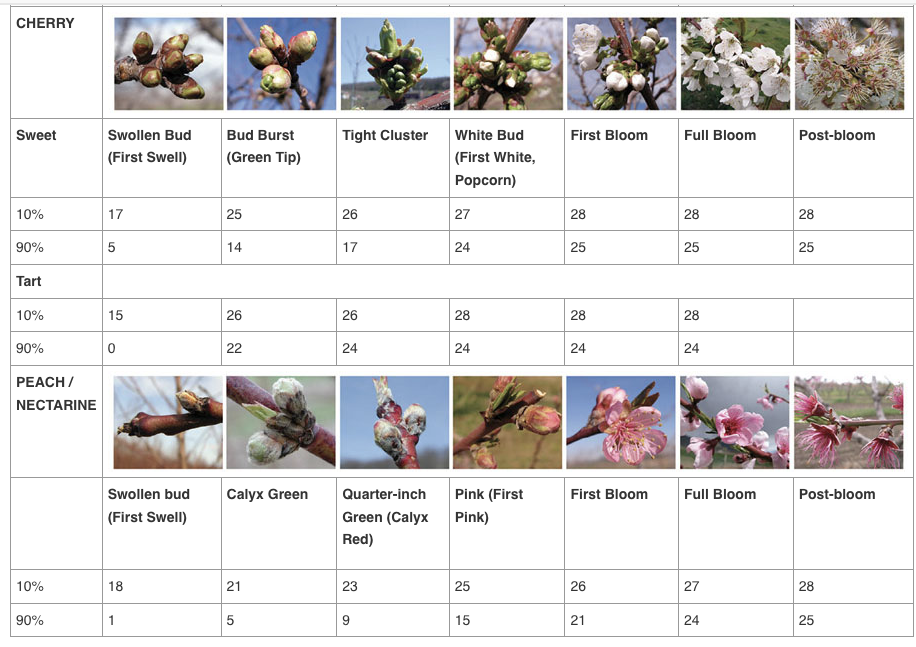
Is that critical? Not really. Even if apples, peaches, or cherries are at full bloom, such a brief dip will likely cause only about 10% blossom damage. That level of damage is often considered a natural and even beneficial thinning. In fact, such frost events can act as a signal to the tree to initiate more flower buds for the following season, helping ensure a strong bloom next year. So—no major concerns, unless you observe temperatures that fall within the critical ranges capable of killing 90% or more of your flowers (refer to the critical temperature table https://irp.cdn-website.com/45c0e18f/files/uploaded/Critical_Temperatures_Frost_Damage_Fruit_Trees_Utah.pdf
Should you turn on wind machines or irrigation (under-tree or over-tree sprinklers)? That’s your call. Personally, I wouldn’t, as long as temperatures stay within the forecasted range. But if you want to play it safe, it wouldn’t hurt—especially in low-elevation or frost pocket areas where these tools can truly make a difference. Since it’s a radiative freeze, both wind machines and sprinklers can be effective. Let’s hope for the best and I look forward to seeing you all at our upcoming orchard meetings!
This week and weekend, the temperature is expected to drop below freezing, and some areas throughout the state may even experience snow showers. While the apples, cherries, and peaches in our location in Winchester, VA aren’t at great risk yet because the flowering buds are not yet at a developmental stage that raises red flags, other parts of the state, particularly around central and southwestern Virginia, could be at a much more advanced stage, particularly for stone fruits. These freezing temperatures might be a cause for concern.
That’s why some growers might be thinking about using irrigation sprinklers for frost protection. It’s a convenient method if you already have them in your orchard. But, I’ve noticed over the years that some might be using sprinklers the wrong way or when they’re not necessary, which can cause more harm than good.
I hope we don’t experience any damaging frost this season, but if we do, and you’re considering turning on your sprinklers as your last resort in the face of spring frost, I’ve recycled some information from old blog posts to remind you of the science and application of using sprinklers for frost mitigation. So, here’s a quick read to help you understand how to use sprinklers effectively and safely.
If you’re looking for a way to protect your trees from frost damage, using sprinklers (e.g. overhead or under-tree irrigation sprinklers) may be a viable solution. When you use sprinklers, you are essentially harnessing the latent energy of water molecules as a source of heat to warm up your trees. But how does this work exactly?
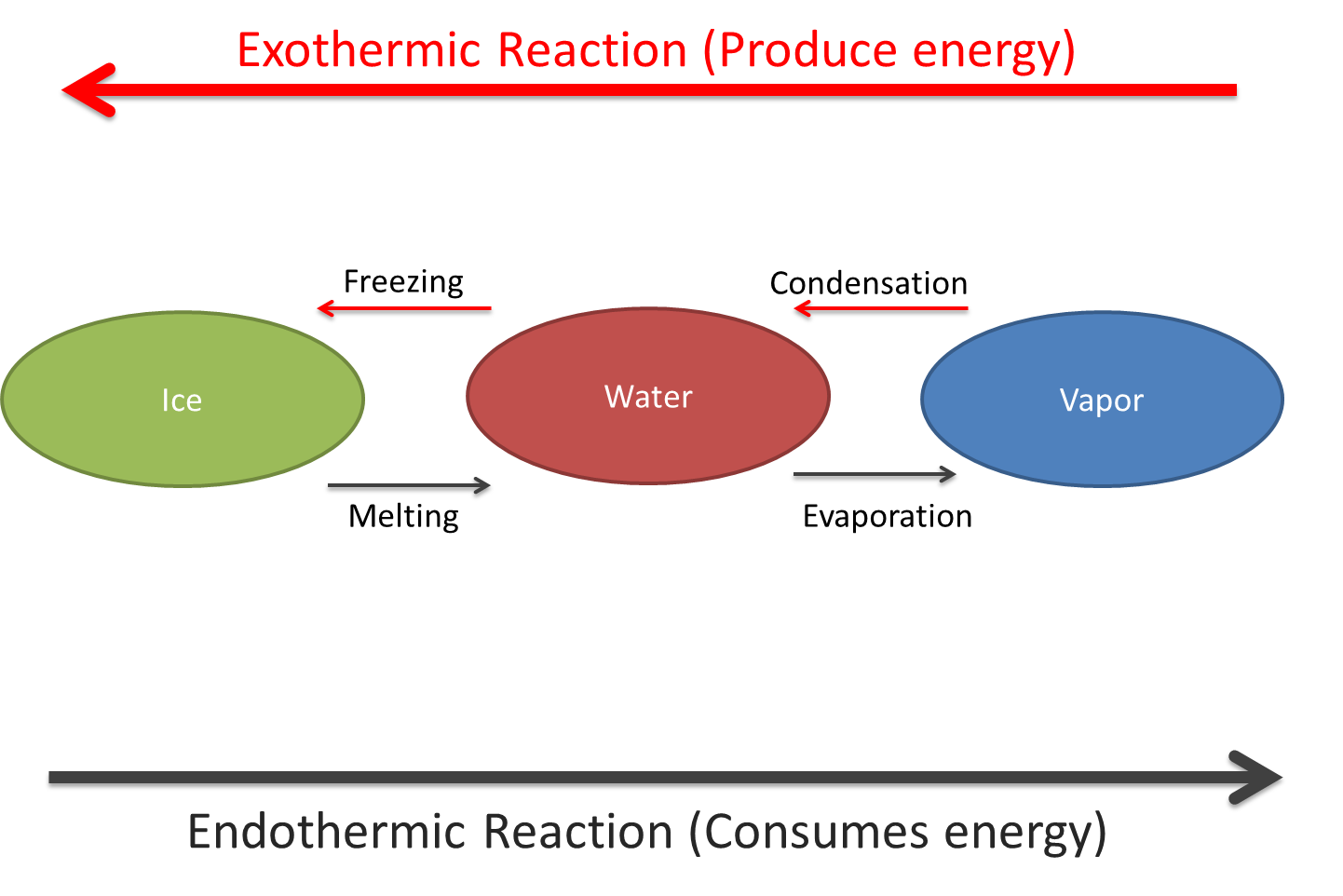
To understand this phenomenon, it’s important to note that water exists in three states: liquid, solid (ice), and gas (vapor). The transition among these states can either produce energy (exothermic) or consume energy (endothermic).
When the air temperature drops below freezing point (< 32°F), and you use sprinklers, you encourage the transition of water from its liquid phase into ice. This process releases latent energy into sensible energy (heat) that plant tissues can use to warm up.
While this may seem like an ingenious solution, there are some potential drawbacks to using sprinklers. To ensure that using sprinklers to reduce frost damage doesn’t harm your plants, there are three crucial things to consider. Let’s take a closer look at each one.
First and foremost, it’s essential to keep an eye on the wind. This is because wind can encourage the transition of water from its liquid phase into its gaseous phase (vapor). During this process, heat in the air and around your plants will be consumed in an endothermic reaction. That’s why it’s recommended that you avoid using sprinklers if the wind speed is above 10 mph.
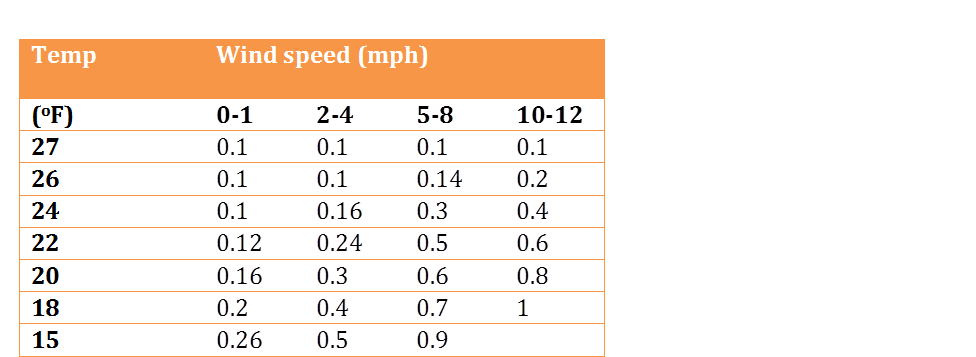
To help you determine the amount of water needed under different wind conditions and temperatures, refer to the table below (Table 1).
Table 1 provides information on the amount of water (in inches per hour) that should be provided for frost protection under different wind speeds (in miles per hour). This table is based on information from the University of Florida Extension Circular 287.
The second thing you need to consider when using sprinklers to reduce frost damage is the dew point. In simple terms, low dew points mean low humidity. If the dew point is too low, the water you add through sprinklers will quickly evaporate to compensate for the low humidity. This will cool down the air around your plants, which will cause more damage.
Under moderate dew points, a portion of the water you add through sprinklers will turn into vapor and consume heat, while another part will turn into ice and produce heat. After some time, the net energy will be positive, and you’ll reap the benefits of using sprinklers. However, if the dew point is too low, it means that the air is too dry and will take much longer to become saturated with vapor. During this time, the air temperature may drop to a critical temperature that can damage your buds or flowers. In this scenario, using sprinklers may cause more harm than good to your plants.
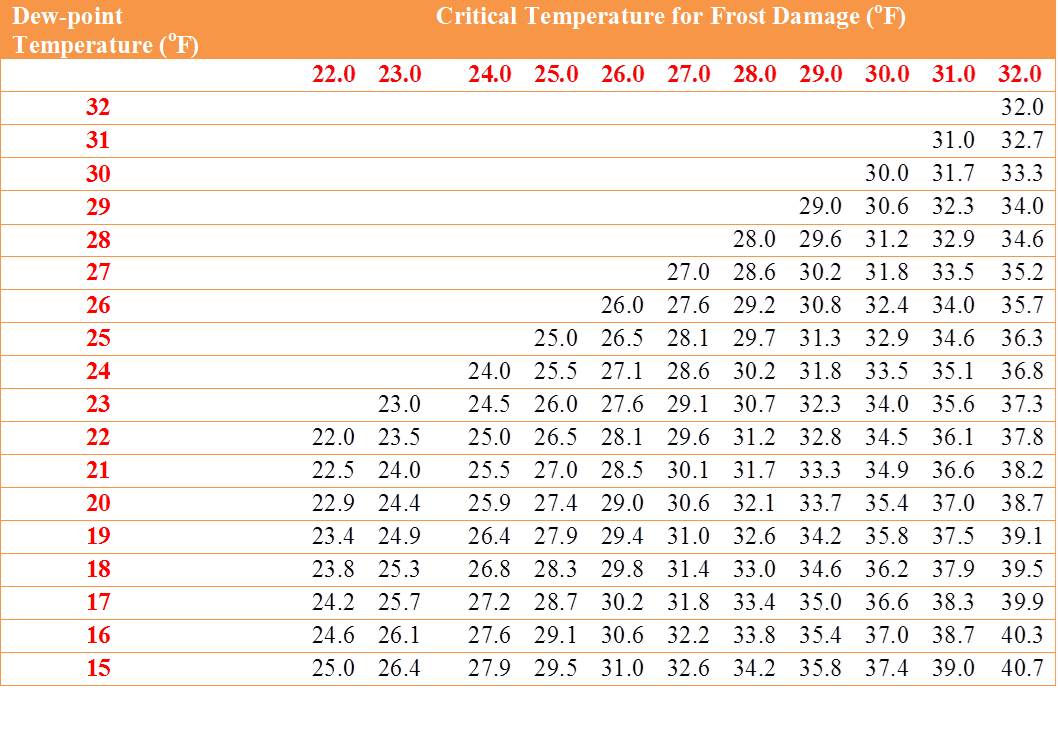
To help you determine whether sprinklers will be useful in your situation or not, refer to the table below (Table 2) to determine the temperature at which you should turn your sprinklers on/off. If the dew point and the critical damage temperatures are not within the range shown in the table, it’s best to avoid using sprinklers altogether.
Table 2 provides information on the minimum temperature at which sprinklers should be turned on/off. This data comes from UC-Davis and is part of their FP005 Quick Answers guide.
To determine when to turn your sprinklers on and off for frost protection, use a critical temperature for frost damage (columns) and dew-point temperature (rows) chart. The point where the row and column intersect is the temperature at which you should turn on or off your sprinklers. It is generally recommended to use sprinklers to protect against temperatures in the range of 24 to 32F.
To find out the critical temperature at which 90% of the flower buds can be killed, please refer to the following link: https://treefruithorticulturevaes.wp.prod.es.cloud.vt.edu/2022/03/27/hard-freeze-is-expected-this-tuesday-march-29/
You can get the dew point information for your location by using your zip code on Intellicast at http://www.intellicast.com/Local/Weather.aspx?location=USVA0837.
The third factor to consider is the amount of water your sprinklers can provide. If you’re uncertain whether your sprinklers can provide an adequate amount of water, it’s best not to use them at all. Refer to Table 1 to determine the amount of water required under different conditions.
By considering these three factors, you can ensure that using sprinklers to reduce frost damage is effective and safe for your trees.
Another frost/freeze event is expected from midnight today to 9:00 am tomorrow (Monday, April 18), with temp as low as 30 oF in some portions of central, northern, and northwest Virginia. On their webpage, the National Weather Service stated that “this frost and freeze conditions will kill crops, other sensitive vegetation and possibly damage unprotected outdoor plumbing”. I can’t comment about plumbing, but I can probably provide insights into how this frost event would impact apples, peaches, and apples in the state. In our location in Winchester, VA, most apple cultivars, including Honeycrisp, Gala, Fuji, Reds, and Goldens, are between 20%- 90% bloom. Some early cultivars, e.g., Pink Lady and Zestar, are already post-bloom. For cultivars at early bloom and full bloom, 10% kill happens at temperatures below 28 oF for > 30 min; and 90% kill happens if the temp drops below 25 oF for >30 min. Based on the current forecast, the lowest temp in most of the locations I looked at in Frederick, Rappahannock/Maddison, Roanoke, Nelson, and Carroll counties, is 30 oF, which should not, theoretically, cause any significant damage to apple blossoms. For cultivars at post-bloom and petal fall, subfreezing temp (below 32 oF) can cause damage to the skin of developing fruitlets, leading to “frost rings”. Fruits with a frost ring will likely grow normally until harvest, but blossoms damaged by the frost will likely abscise within the next 2-4 weeks. Temperatures above 28 oF should not cause significant damage to flowers and developing fruits of peaches and sweet cherries.
Temperature profile of orchard blocks in the AHS Jr. AREC’s research farm (Winchester, VA) on March 28-29, 2022.
Our digital temperature data loggers recorded temperatures as low as 17 oF that continued for > 2h this morning (Tuesday, March 29). Some of our apple cultivars, including Gala and Pink Lady, were at the tight cluster and first pink; whereas, others like Fuji and Honeycrisp were between half-inch green and tight cluster. Temperatures below 21F were enough to wipe out the flowers of these cultivars completely, but we were pleasantly surprised to find out that all apple cultivars we assessed this afternoon survived this frost event with minimal damage. We recorded between 15 – 35% bud mortality in the king blooms and less than 15% in the side-blooms of Honeycrisp, Gala, and Pink Lady, with the latest showing the highest percentage of damage. Similarly, the four peach cultivars (Rich May, Sunhigh, Red Haven, and John Boy) we evaluated showed less than 15% flower mortality.
I generally believe that 10-30% flower mortality after frost is not a bad thing and could even be considered desirable as a natural thinning process and to ensure a good return bloom next year. It is generally evident that thinning during bloom has a very positive impact on return bloom; and whether this thinning is done chemically (e.g. liquid lime sulfur), mechanically (e.g. hand thinning), or by mother nature, the impact on return bloom will probably be the same.
On the other hand, our sweet cherry cultivars failed to sustain these low temperatures, and despite being still in the tight-cluster stage, they were severely damaged, with an average bud mortality rate of around 80% in Ebony Pearl and Selah. Regina, a relatively late-blooming cultivar, was still at the swollen bud stage, showing 0% damage.
It is also worth noting that flower development can vary among cultivars, species, and locations in the state. Also, temperatures recorded this morning in Winchester were seriously low, but they might not be the lowest in other areas. So, you can depend on this report only if your trees are in the same developmental stage and your temperature didn’t go below 17 oF this morning. If otherwise, I suggest that you evaluate the damage in your block as per the method and images I shared in previous posts.
Flower buds were collected from three apple cultivars (Pink Lady, Gala and Honeycrisp) and assessed for damage after the frost event that occurred on the morning of March 29, 2022 in Winchester/Frederick county area.Flowers were collected from four peach cultivars (Sun High, Rich May, John Boy and Red Haven) and assessed for damage after the frost event that occurred on the morning of March 29, 2022 in Winchester/Frederick county area.Flowers were collected from three sweet cherry cultivars (Ebony Pearl, Regina and Selah) and assessed for damage after the frost event that occurred on the morning of March 29, 2022 in Winchester/Frederick county area.
Based on the weather forecast for Tuesday, March 29, temperatures will drop to 19 oF for a couple of hours (6:00 – 8:00 am) in the Frederick County and Rappahannock-Madison area, which could be devastating for the majority of apple cultivars and some early-bloom peach cultivars grown in these locations. Our apple cultivars in Winchester are currently in the tight-cluster stage, and some (e.g. Pink Lady and Zestar) are in the full pink-stage now. The majority of peach cultivars are in the pink stage now, with some early-blooming cultivars (e.g. John Boy) are already in bloom. Sweet cherries, on the other hand, are still in tight-cluster stage. Based on the critical temperature tables below, 90% of apple buds at tight-cluster can be killed if exposed to temperatures at 21oF and below for more than 30 min. Similarly, peach flowers at full bloom can be killed at the temperatures forecasted for Tuesday. Sweet cherry cultivars that are still in tight cluster will be likely OK, and only 10% can be damaged by this freeze event.
This is a typical advective freeze, accompanied by wind > 5 mph and dry air. Unfortunately, none of our frost mitigation measures, e.g., wind machines, overhead and under-tree sprinklers, can be of utility with this type of frost. Using any sprinklers, or spraying the tree with water using an air-blast or any other sprayer, will cause more damage than benefit. Heaters, on the other hand, can provide some protection if used for several hours, probably starting from midnight.
Tree fruit growers in the Nelson County may also face a brief, less damaging frost event, with the lowest temperature predicted to reach 24 oF before sunrise. Based on the current forecast, no frost/freeze is predicted for Roanoke and Carroll-Patrick counties.
Source:New Mexico State UniversitySource:New Mexico State University
The weather forecasts for the coming week show three days with potential frosts. For Wednesday morning, the National Weather Service is forecasting a low of 29F in Winchester and a low of 30F in Tyro. I’m sure other locations in VA are also at risk of frost.
In the Winchester area, apples are 1/4″ green tip with some cultivars showing pink. Peaches are at first pick to some early blooming cultivars having a few open flowers. The phenology in Central VA is a bit more advanced, with peaches having been in bloom for nearly two weeks. According to the critical temperature charts, we can expect a small amount of damage from these temperatures but not a complete crop failure. So, fingers crossed that it doesn’t get any colder than predicted. However, even if flowers are not killed by the frosts, there is also the risk of russets and frost rings. Temperatures are forecasted to warm up towards the end of the week.
Below are links for the Washington State University fact sheets (as pdfs) on the critical temperatures for flower buds:
Additionally, work done by Dr. Steve McArtney (NCSU) and others has shown that applications of Promalin (gibberellin 4+7 plus the cytokinin 6-BA) at 25 ppm immediately following a frost event may help increase fruit set and cropping. In essence, the Promalin sends signals to the developing fruit that the seeds are still intact and growing, even though the frost has killed the embryo. The result is a crop of parthenocarpic (seedless) fruit. This “rescue treatment” is not a full proof way of setting a crop, and it is still unclear under what environmental conditions and for which cultivars it works best. If the temperatures drop much below 28F, each grower will have to make a decision as to whether or not it is worth trying to rescue the crop with Promalin.
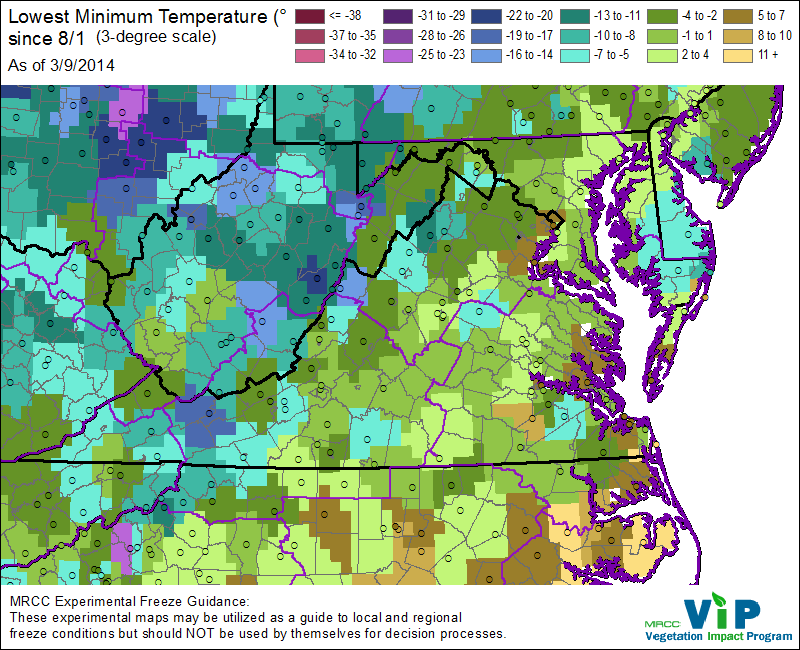
The winter of 2013-14 will surely go down as one of the colder, snowier winters in recent years. Many growers have been asking about potential flower bud damage from the cold temperatures that we’ve had. As a general rule-of-thumb, peach and sweet cherry buds are hardy to about -10F, and near complete bud loss and perhaps some branch damage will happen when temperatures are below -20F. As I mentioned in a previous post, plants are not affected by wind chills, so we are talking about absolute cold temperatures, which will be warmer than the wind chill temperatures that are reported in weather reports. Apples and pears are generally hardy down to -25F. However, hardiness is much less when: there is a warm spell preceding the cold temperatures, when trees have already been pruned, when the cold temperatures persist for an extended period of time, or when trees were under water or nutrient stress in the previous season. Under these circumstances, peach and sweet cherry buds might be damaged at 0F or even warmer. During this past winter, peach buds may have been killed during multiple events.
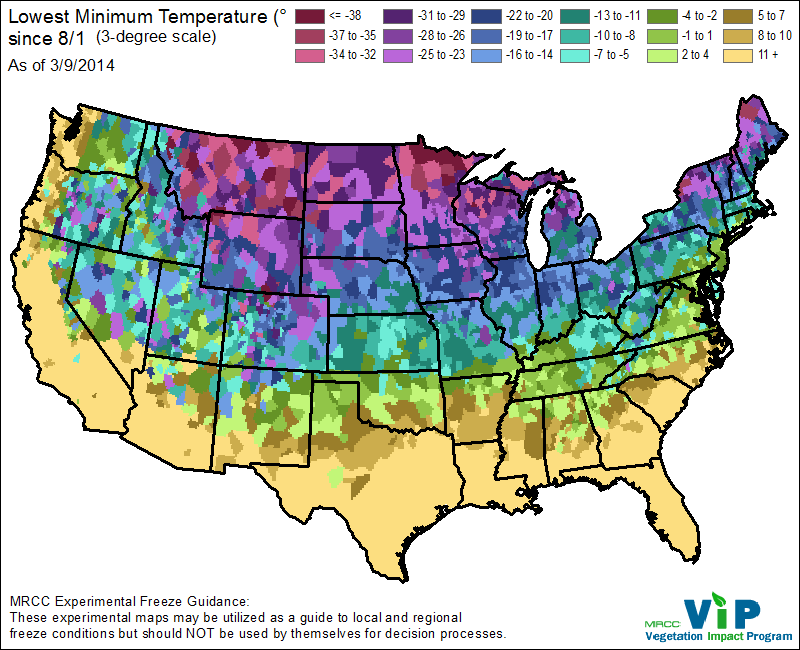
Looking at the absolute cold temperatures from August 1 to present, we see that many of the fruit growing regions in the mid-west and Northeast likely have moderate to significant damage to their peach and sweet cherry crops.
Zooming into the Mid-Atlantic, we see that there were some areas along the western edge of Virginia that sustained temperatures below -10F this winter. Many other areas of Virginia have had temperatures in the minus single digits.
To get an idea of how much peach bud damage is in the Winchester area, last week my lab collected 10 peach branches from each of seventeen different blocks of peaches. Many of the blocks were located at the AREC, but we also collected branches from some nearby farms. The branches were kept in a vase at room temperature for 24 hours, and then every bud on every branch was dissected from the tip to the base to look for damage. Healthy buds are green and look moist, while damaged bud are brown and translucent.
Table 1. Peach bud damage from the winter of 2013-14. Branches were collected on March 4 and analyzed on March 5.
Cultivar
Percent of Flower Buds Alive on Shoot
Total Number of Buds Dissected
Contender
83.0
317
Laurel
30.8
289
Loring 1
0.5
195
Loring 2
0.0
180
Loring 3
91.0
144
Red Haven 1
94.1
187
Red Haven 2
92.5
253
Red Haven 3
83.2
232
Red Haven 4
96.0
173
Red Haven 5
97.8
90
Red Haven 6
86.6
313
Redskin
0.0
197
Sentry
65.0
163
Sugar Giant
79.0
372
Sweet Breeze
41.7
103
Sweet-N-Up
45.9
204
Topaz
50.0
142
From these data it is clear that there are both variety and site differences in bud damage. A few blocks are likely to have no or little fruit this year, but most blocks have the potential to set a full crop. Remember that it only takes 15-40% of the buds to make a full crop. The bottom line is that before you prune, it would be a good idea to assess how much damage you have in your trees. Only in situations where severe bud damage occurred should growers leave extra wood when pruning.